Senior Research Scientist at Inria · Sophia Antipolis
Arnaud Legout
Research, training and consulting in data science
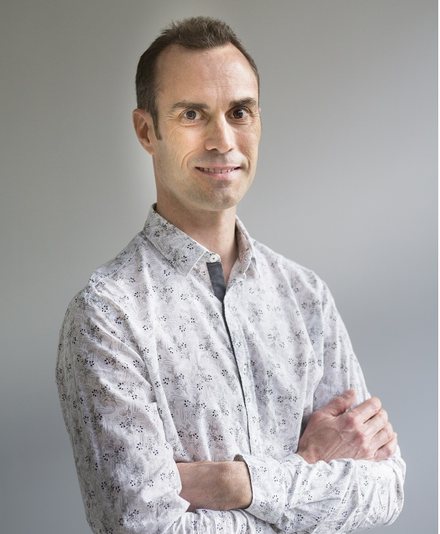
I am a senior research scientist at Inria, in Sophia Antipolis, France, and I hold a habilitation to supervise research (HDR). For more than twenty years, I have been analyzing data at very large scale to understand the Internet, social networks and privacy.
In parallel, I have been training teams in Python and data science since 2011, and I work with companies as an independent consultant.
Research, training and consulting
Research
Research at Inria
- Internet measurement
- privacy
- social networks
- Bitcoin
Publications, current and past projects, Ph.D. students, editorial activities and teaching. Twenty years of very large-scale data analysis, published in the leading conferences of the field.
See the research →Training
Python and data science training
- Python
- pandas
- Polars
- Numba
- scikit-learn
Intensive in-company training in Python, data science, high-performance computing and machine learning, for data scientists, engineers and researchers. In French or English, on site or remote.
See the training courses →Consulting
Data science consulting and audits
- performance and cost
- AI agents
- scientific review
An independent look at your data processing, at how your data team uses AI agents, and at the validity of your analyses. Everything starts with a free, no-commitment one-hour call.
See consulting →Career
After a master's degree in mathematics from the University of Nice-Sophia Antipolis, I did my Ph.D. at Institut Eurecom, in Ernst Biersack's group, on multicast congestion control. I then left the lab twice to work in industry.
-
2000
Ph.D. in communication systems, Institut Eurecom.
-
2000–2004
Architect, then CTO assistant, at Castify Networks, a video streaming startup.
-
2004
Research scientist at Inria, Sophia Antipolis.
-
2011
First Python training courses for companies.
-
2012
Habilitation to supervise research (HDR).
-
2014
Creation, with Thierry Parmentelat, of the Python MOOC on the FUN platform.
-
2016–2020
Founder of the startup ElectroSmart, whose app was downloaded by more than one million people.
-
2021
Senior research scientist at Inria.
-
Today
Senior research scientist at Inria, Sophia Antipolis, in the project-team DIANA. Data science training and consulting in parallel.
Research
My work covers Internet measurement, social networks and information propagation, security and privacy, mobile systems and peer-to-peer content distribution. It is published in the leading conferences of these fields.
Four examples illustrate the approach:
- the analysis of the entire Twitter social graph, more than five hundred million accounts, which established that most shared articles are never read (ACM SIGMETRICS 2014, ACM SIGMETRICS 2016);
- the analysis of the whole Bitcoin blockchain, sixteen billion links, to find funds that are lost forever;
- years of measurements of BitTorrent exchanges, which showed that the anonymity promised by some tools did not exist (LEET 2010, LEET 2011, ACM SIGCOMM/USENIX IMC 2011);
- the crowdsourced measurement of exposure to radio frequencies with the ElectroSmart app, among 254,410 users in 13 countries from 2017 to 2020 (Environment International).
Several of these works were covered by the international press, including the New York Times, the Washington Post, Fortune, El Diario and Le Monde. My recent work also covers the effect of AI-style suggestions on the accuracy of decisions, the identification of illicit Bitcoin addresses in underground forums, and health discourse on social networks.
I supervised six Ph.D. theses to completion, served on the editorial boards of Proceedings on Privacy Enhancing Technologies (2021–2023, then 2026–2027) and Elsevier Computer Networks (2012–2016), and on the program committees of conferences such as ACM SIGCOMM, ACM IMC, ACM CoNEXT and PETS.
The full list of my publications is in the research section of this site, which also presents my projects, my Ph.D. students and my teaching, as well as on Google Scholar and on my HAL CV.
Teaching
The Python MOOC I designed with Thierry Parmentelat on the FUN platform has gathered more than 150,000 learners since 2014; it is also used by Sorbonne Université and CentraleSupélec.
I teach master's courses at Université Côte d'Azur, today a course on blockchain and privacy in the Ubinet master's program, and previously courses on peer-to-peer applications, scientific communication and an introduction to data science. Since 2024, I have also taught the ComEng course at Eurecom, on oral and written communication for engineers.
Since 2011, I have also trained engineers and researchers in companies: this is the subject of the training section.
Links and contact
- Research page
- Publications, talks and patents
- Curriculum vitae (PDF)
- Google Scholar
- HAL CV
- ORCID
- Université Côte d'Azur
- GitHub
For research: arnaud.legout@inria.fr. For training or a consulting engagement: arnaud.legout@gmail.com.